
Solar Battery Storage in London: What to Check Before You Install
If you are researching solar battery storage London options, you are probably close to comparing installers and deciding whether your property is suitable. A battery system can be an excellent addition to the right setup, but the installation needs to match your building, your existing electrics and the way you actually use power day to day.
At Lunar Indigo Limited, trading as Lunar Indigo Electrical, we provide solar and battery storage installations as part of our wider electrical services across London, Essex and Kent. Before you book, it is worth checking a few practical details first. Doing that early can help you avoid delays, ask better questions and get a more accurate idea of what may be involved.
Solar battery storage London: the key checks before you install
Not every property needs the same battery setup. London homes vary widely, from terraced houses and flats to larger family homes and mixed-use buildings, so a little planning at the start makes a real difference.
1. Be clear about what you want the battery to do
The first question is not where the battery goes. It is what you want it to achieve.
Some customers want to store surplus electricity generated by solar panels. Others are planning ahead for a future solar installation, want better control over energy use, or are thinking about how battery storage could fit alongside other upgrades later on.
Before you request a quotation, think about your priorities:
Are you installing battery storage alongside new solar panels?
Do you already have solar and want to add storage later?
Are you mainly interested in storing electricity for evening use?
Are you trying to future-proof the property for an EV charger or other electrical upgrades?
Is backup functionality important to you, if a suitable system allows for it?
Clear answers at this stage make it easier to choose a suitable system rather than paying for capacity or features you may not use.
2. Check whether your property has a sensible location for the battery
Battery storage needs a practical, safe and accessible installation position. The right location depends on the equipment selected and the layout of your property, but space planning matters more than many people expect.
In many homes, the starting point is a utility room, garage, plant area or another suitable part of the property with a workable cable route back to the electrical supply. Some systems may also be suitable for other locations, depending on the manufacturer requirements and site conditions.
Before booking, consider:
Whether there is enough wall or floor space for the battery and associated equipment
Whether the area is accessible for installation and future maintenance
How close the proposed location is to the consumer unit and other relevant electrical equipment
Whether the route for cables is straightforward or likely to involve extra work
Whether the position could affect everyday use of the space
If you live in a flat or leasehold property, the location question can be even more important. Communal areas, restricted access and shared services can all affect what is practical.
3. Review the condition of your existing electrics
The battery is only one part of the project. Your existing electrical installation matters just as much.
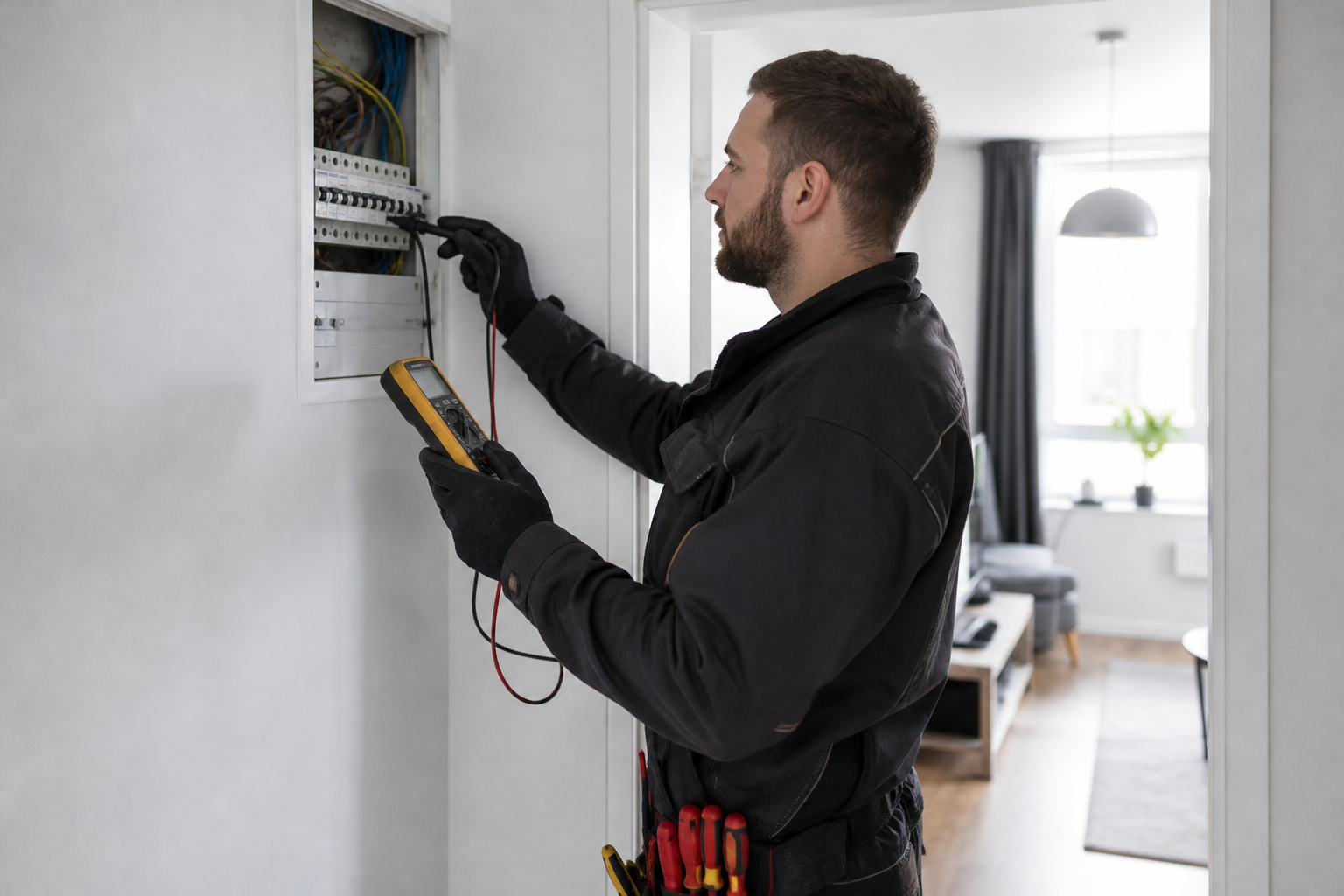
An installer will usually need to assess the consumer unit, protective devices, earthing, bonding and the general condition of the installation before confirming what is suitable. Older electrics do not automatically rule out battery storage, but they can mean extra work is needed before installation can go ahead safely.
That is why it helps to know:
Whether your consumer unit is relatively modern or due for attention
Whether you have had any recent electrical inspection or testing
Whether there are known faults, nuisance tripping or previous electrical issues
Whether other planned upgrades are already on your list
If the condition of the installation is unclear, it can make sense to discuss electrical inspecting and testing at the same time. A battery system should be added to a sound electrical setup, not used to work around underlying issues.
4. Decide whether this is a new solar setup or a retrofit
Solar and battery storage can be installed together, or battery storage can sometimes be added to an existing solar system later. The route you take affects the design, equipment choice and installation method.
If you already have solar panels, compatibility becomes a key question. Not every system works in exactly the same way, and what you already have in place may influence the most practical solution.
Useful details to gather before you enquire include:
Whether solar panels are already installed
The age of the existing setup
Any documents you have for current equipment
Any issues you have noticed with generation, monitoring or access
If you are starting from scratch, it is often easier to plan the full system together. That can give you a clearer picture of equipment location, cable routes and how the installation fits into the rest of the property.
5. Size the system around how you actually use electricity
Bigger is not always better. The most suitable battery size depends on your home, your routine and what else the system needs to support.
A smaller property with modest daytime and evening usage may need a different setup from a busy household with higher demand. The goal is to choose a system that makes sense for the way you live, not simply the biggest unit available.
Before speaking to an installer, it helps to think about:
Your typical daily electricity use
When you use the most power during the day
Whether the property is occupied during working hours
Whether you are planning future additions such as EV charging installation or other electrical upgrades
Whether this is a short-term improvement or part of a longer-term property plan
The more accurately you can describe your usage, the easier it is to discuss realistic options.
6. Understand the permissions and approval side
One of the most common reasons projects slow down is that building constraints were not considered early enough.
Some properties in London are straightforward. Others involve leasehold terms, management company approval, shared services, limited access or conservation-related considerations. Even where the battery itself seems simple, the surrounding practicalities can change the scope of the job.
Points worth checking include:
Whether you own the property or need landlord or freeholder permission
Whether any part of the installation affects communal or shared areas
Whether access for equipment delivery and installation is restricted
Whether the electrical connection may require notification or approval through the relevant network process
You do not need every answer before making contact, but raising these points early helps avoid wasted time later.
7. Ask what the installation process will actually involve
A good quotation should do more than name a piece of equipment. It should help you understand the practical steps involved.
Before you commit, ask what happens from survey to completion. That includes what will be checked on site, whether any remedial electrical work may be needed, how long the installation is likely to take and what handover information you can expect afterwards.
Useful questions include:
Will there be a site visit before finalising the installation?
What parts of the existing electrics will be assessed?
Is any upgrade work likely to be needed first?
How disruptive is the installation expected to be?
What paperwork, certification or user guidance will be provided after completion?
These details help you compare providers on more than price alone.
Why careful planning matters
Checking the basics before you book is not just about being organised. It can directly improve the installation process.
More accurate quotations: Fewer unknowns usually mean clearer pricing and better advice.
Less risk of delay: Property constraints, electrical upgrades or permission issues can be identified earlier.
Better system fit: Your battery can be planned around your real needs rather than guessed requirements.
Smarter future-proofing: If you are also considering other electrical improvements, planning them together often makes more sense.
For example, if solar battery storage may sit alongside wider electrical installation services, it helps to look at the property as a whole rather than treating each upgrade in isolation.
Work with an electrician who can look at the full picture
Battery storage does not sit separately from the rest of your electrics. It connects into the wider installation, which is why broad electrical experience matters.
At Lunar Indigo Limited, we provide electrical services across London, Essex and Kent, including solar and battery storage, emergency call-outs, electrical repairs, electrical installations, EV charging and inspection work. That wider experience is useful when a project involves consumer unit condition, cable routes, future upgrades or questions around the suitability of the existing setup.
Customers who contact us can also take confidence from our verified credentials:
20 years of experience
NAPIT Part P Registered
TrustMark accredited
Fast-response electrical support and on-call services
For many London properties, that joined-up approach is valuable. Instead of looking at the battery alone, we can discuss how the proposed installation fits the wider electrical picture.
Planning solar battery storage for your property?
If you want clear, practical advice before you commit, speak to Lunar Indigo Limited. We can discuss your property, your current electrics and what type of setup may be worth exploring.
Get in touch with Lunar Indigo Electrical to discuss your installation options for solar and battery storage in London.
FAQs about solar battery storage in London
Can I install battery storage without solar panels?
In some cases, yes. Battery storage is not always limited to homes with existing solar panels. The right setup depends on your objectives, your property and the suitability of the electrical installation.
Where is the best place to install a solar battery in a London home?
That depends on the equipment and the property layout. In general, the location should be practical, accessible and suitable for safe installation, with a sensible cable route back to the rest of the system.
Will an older consumer unit stop me installing battery storage?
Not necessarily, but older electrics may need attention before installation can go ahead. A proper assessment of the consumer unit and the wider installation is an important part of the process.
Do flats and leasehold properties need extra checks for battery storage?
Yes, they often do. Permissions, access, communal areas and cable routes can all affect what is possible, so these details should be discussed early.
Should I plan battery storage at the same time as an EV charger?
If you expect to install an EV charger in the near future, it is sensible to mention that from the start. Looking at both upgrades together can help with planning and future-proofing.
Conclusion
The right battery storage installation starts with the right questions. If you check your goals, your space, your electrics and any property constraints before booking, you are much more likely to end up with a system that suits the building and the way you use it.
If you are considering solar battery storage in London, contact Lunar Indigo Limited for practical advice on the next steps.
Comments